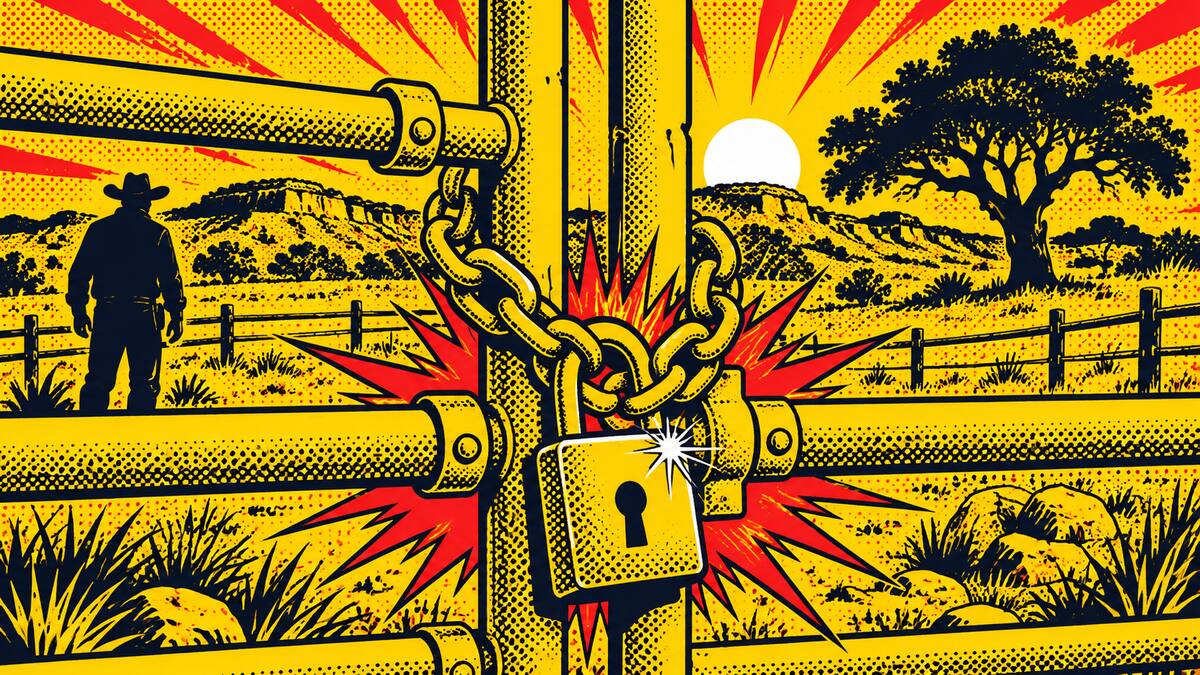
For a ranch or hunting lease gate, use a weather-rated padlock with a shrouded or hardened shackle, and key the group’s padlocks alike so members carry one key. Keyed-alike works when the cylinders and keyways are compatible. When a member leaves, rekeying the cylinders can cost less than replacing the hardware. WOW Locks quotes padlock and gate work on the call, so describe your locks at (844) 969-5625.
Why a Lease Gate Is a Key-Control Problem (Members, Guests, Ranch Hands)
A house has one family and a handful of keys. A lease gate has a rotating cast. Members, their guests, the rancher, a ranch hand, the feed delivery driver and the guy who fixes the water trough all want through the same gate.
Every key in that cast is a key you cannot see. Keys get copied and lent, and some end up on a truck dash in a parking lot three counties away.
So the real question is not “which padlock is strongest.” It is “who holds a key, and how fast can I shut that door when the answer changes?” Each fall, when leases turn over before the hunting seasons, that question gets loud.
Hero rule of key control: a lock is only as private as the last person you trusted with a copy.
Padlock Basics: Shackle, Body, Cylinder and Weather Rating
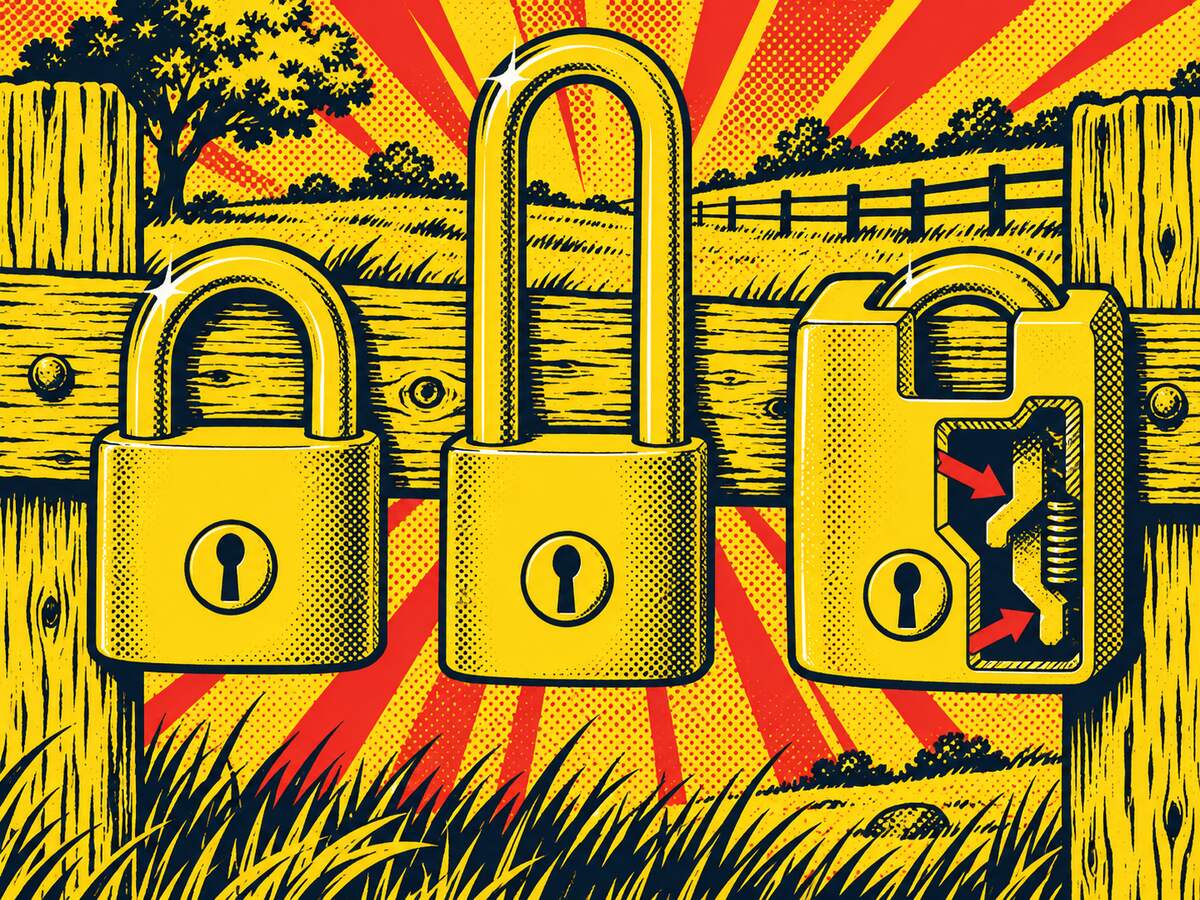
Four parts matter on a gate lock.
- Shackle: the U-shaped bar. This is what a bolt cutter goes after. A thicker, hardened shackle is harder to cut.
- Body: the case. Laminated steel and solid-metal bodies resist prying and weather better than thin stamped ones.
- Cylinder: the keyed part. This decides whether you can rekey the lock or key it alike with others.
- Weather rating: a manufacturer’s claim about outdoor use. Read the maker’s own language on the package or spec sheet, and treat anything vague as a maybe.
Here is how the four common styles stack up for a gate.
| Padlock style | Weather handling | Shackle cut resistance | Best use |
|---|---|---|---|
| Standard | Depends on the build. Exposed keyway and shackle collect dust and rain | Lowest of the four, since the shackle sticks out | Interior doors, light-duty sheds |
| Shrouded shackle | Good when the body is weather-rated | Higher. The body wraps the shackle, so cutters have less to grab | Ranch gates, exposed chain and hasp |
| Disc-style | Strong. Sealed design with little exposed shackle | High. Almost nothing for cutters to bite | High-risk gates, equipment, trailers |
| Keypad | Depends on the electronics and battery housing | Depends on the shackle. The code is the weak point | Lease access where you want to avoid copied keys |
A padlock is also only half the system. A heavy lock on a thin chain is a lock with a hole in it. Match the chain, hasp and gate hardware to the lock.
Keyed-Alike or Keyed-Different: Who Needs One Key and Who Needs Their Own
Keyed-alike means several padlocks open with one key. Keyed-different means each lock has its own key.
Here is the catch. Padlocks can only be keyed alike when their cylinders and keyways are compatible. Think of the same manufacturer line, not a mixed bin of locks bought over ten years at three different stores. Mixed locks may need new cylinders to match, and some inexpensive padlocks cannot be changed at all. Describe what you own when you call and we will tell you what is possible.
Now the member key plan. Pick the row that matches how your lease really runs.
| Key plan | Who carries what | Upside | Downside | Rekey trigger |
|---|---|---|---|---|
| One key, all gate locks alike | Every member holds the same key | One key opens main gate, side gate and feed house | One lost key puts every alike lock at risk | Any unreturned or lost key |
| Alike by group | Members share one key. Rancher and hands share another | Hands cannot open the member lock, and members cannot open the barn | Two key sets to track | A key from either group goes missing |
| Keyed-different | Each lock has its own key. Members carry a ring | One lost key exposes one lock | Heavy rings, more copies to manage | The lock that key opened |
| Keypad padlock | Members get a code, not a key | Nothing to copy. Change the code, done | Batteries, and codes get shared | A member leaves, or a guest code gets passed around |
Whatever plan you pick, add a key log: a simple sheet with each member’s name, the keys issued, the date and a signature. When someone leaves, the log tells you exactly what to collect.
Hill Country Heat, Dust and Limestone: What Fails First
Hill Country ranches are hard on hardware. Summer sun bakes metal. Dust and fine limestone grit work into keyways. Rain and humidity do the rest.
Here is what tends to give out first.
- The keyway. Grit packs in, and the key starts to stick or drag.
- Unprotected shackles and chains. Surface rust is the first sign of trouble.
- Thin bodies. Stamped metal bends under a pry bar long before it wears out.
- Keypad batteries. A dead battery on a locked gate is a long walk back to the truck.
A few habits help. Close the keyway cover if the lock has one. Hang the lock with the keyhole facing down so rain drains out. Spray a light lubricant made for locks into the keyway once or twice a year, and skip heavy grease, which collects dust. Check batteries on keypad locks before each season starts.
The Day a Member Leaves: Rekey the Cylinder, Not the Whole Gate
Someone leaves the lease. Maybe they sold their share, maybe the friendship ended. Either way, they walk away with a key.
You have two options. Replace every lock and chain, or rekey the cylinders. Many padlocks can be rekeyed to a new key, which can cost less than buying new hardware. It depends on the make, and some padlocks are sealed and cannot be rekeyed. If you own keyed-alike locks, rekeying them all to one new key lets you keep a single-key system and shut the old key out.
Use this lease access checklist.
- Collect every key the departing member holds, and mark it off in the key log.
- If any key is missing or a copy might exist, treat it as lost.
- List every lock that key opened: main gate, side gate, feed house, barn, blind.
- Call and describe the locks (make, style, how many). Ask what can be rekeyed and what needs replacing.
- Rekey or replace, then issue new keys to current members and update the log.
- Test every lock before you leave the property.
Barn, Feed House and Deer Blind Locks
Not every lock on the property needs the same muscle. Match the lock to the risk.
- Main gate: your best padlock. Shrouded or disc-style, on a heavy chain.
- Barn and feed house: a weather-rated padlock on a solid hasp, or a keyed deadbolt if there is a real door and frame. The door and frame matter as much as the lock.
- Deer blinds: a basic weather-rated lock keeps casual visitors out. Do not expect it to stop a determined thief, and do not leave valuables inside.
- Equipment and ATVs: disc-style padlocks or locking cable, kept out of sight.
If your lease also has a ranch house or cabin with standard door locks, those are different. The residential lock rekeying service covers door locks, and the same key-log habit applies there.
What It Costs
Padlock and gate work is a custom quote. The published flat rate for rekeying is for residential door locks, so it does not apply to padlocks, gates or ranch hardware. Distance to a remote ranch gate and any after-hours work are add-ons, and any add-on is quoted on the call before a technician is dispatched.
To get a clear number, have this ready when you call:
- How many locks, and what kind (padlock, hasp, deadbolt, keypad)
- The make on the lock, if you can read it
- Whether you want them keyed alike
- The nearest town, such as Boerne, Helotes or Martindale
WOW Locks has local technicians based in San Antonio and serves Boerne and Helotes from the San Antonio hub. Martindale is covered from the Austin hub. You can also see the flat-rate price list for the door lock services we do publish.
WOW Locks LLC holds Texas DPS (TOPS) license B10595301, and the company is insured and bonded.
Need locks sorted before the season? Call (844) 969-5625, or send the details through request service. Tell us what you have, and we quote it before anyone rolls out.