When you lease a storefront, the previous tenant, the landlord, contractors and staff may all hold keys. Walk every door, decide whether to rekey, repin or replace, and set a key log before opening day. WOW Locks rekeys commercial locks at $45 per lock with a 2-lock minimum and quotes hardware and access control on the call at (844) 969-5625.
Opening day is a deadline. Build-outs run late, inspections stack up, and the lock is the last thing anyone checks. One walk-through and a key log are enough to close that gap.
Why the Previous Tenant’s Keys Are Your Problem
Every key ever cut for your suite keeps working until someone changes the lock. That includes keys held by the previous tenant, the landlord, the property manager, contractors, cleaners and former staff. None of them need bad intentions for this to matter, because keys get lost, lent and copied. A rekey turns all of those old keys into scrap metal.
Nobody hands you a list of who has a key. The previous tenant may not remember who got a copy for the weekend inventory count. The landlord may keep a set on file, which is fine, but you should know it. Think of the lock as a guest list nobody has updated since the last tenant moved in.
Houston adds one more reason to look closely. Houston’s humid climate is rough on exterior hardware, so a lock that “works fine” on the back door may be stiff, rusted or loose. A key that sticks today can snap in the first week of business.
Walk the Door: Cylinder, Deadbolt, Mortise, Panic Hardware, Glass Door Hardware
Every storefront door is a stack of parts, and each part answers a different question. The cylinder is the part your key turns. The deadbolt is the bolt that throws into the frame. A mortise lock is the boxy case set into the edge of heavier or older doors. Panic hardware lets people leave without a key. Glass doors use their own narrow-stile or patch hardware.
Run this audit on every door the public, staff or deliveries can use. Do it with the door open and then closed.
- Number each door on a sketch of the floor plan: front, back, office, storage, roof hatch, alley door.
- Write down the lock type on each: cylinder, deadbolt, mortise, exit device, glass door hardware.
- Turn the key from the outside five times. Note any door that sticks, grinds or needs a jiggle.
- Look for rust, loose screws, a wobbling handle or a cylinder that spins in the door.
- Close the door gently and let it latch on its own. Note any door that has to be pulled or lifted to latch.
- Count the keys you were given for each door. Compare that to what the lease or landlord says exists.
- Photograph the lock, the edge plate on the door and the brand stamp if you can find one.
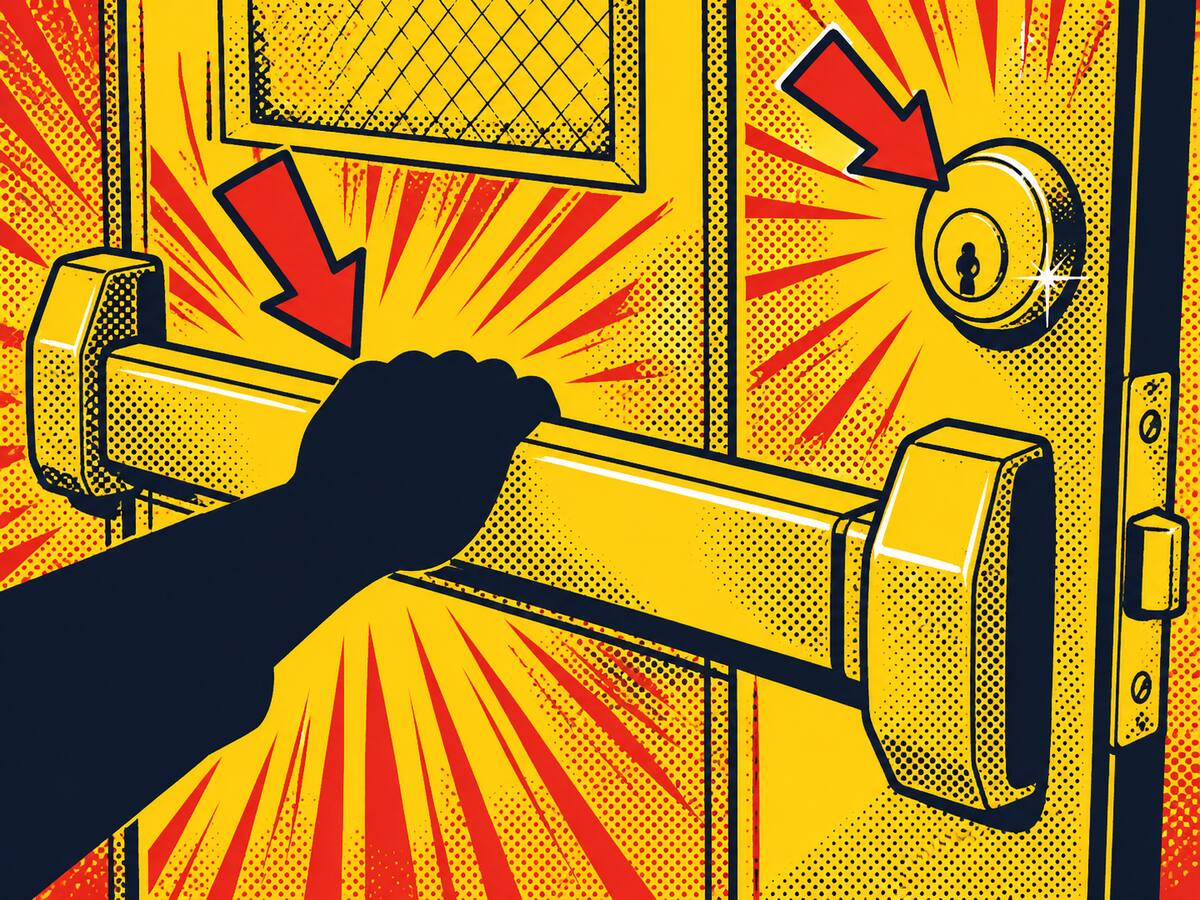
Those photos are not busywork. They are what lets a technician tell you whether a door is a rekey, a swap or a custom quote before anyone drives out. On aluminum-frame glass doors and frameless glass doors, the exact model matters, so keep a close shot of the lock and the bottom rail ready for the dispatcher.
Rekey, Repin or Replace: Which One for Which Door
Rekey when the hardware is sound and you only need the old keys dead. Repin to match when you want several doors to open with one key. Replace when the hardware is worn, damaged or the wrong tool for the door. In practice rekey and repin are the same hands-on job: swap the pins so a different key works. The choice is what you pin to.
| Choose | When it fits | Watch for |
|---|---|---|
| Rekey | Locks turn smoothly, the cylinder accepts a rekey, and you only need old keys to stop working | A cylinder that spins loose or is damaged inside may need replacing instead |
| Repin to match | You want the front and back doors to share one key, or you plan to fit a master key plan later | Mixed brands and keyways may not match; a mismatched cylinder is swapped |
| Replace | The lock is worn, rusted, damaged, missing parts, or you want a different function such as a keypad | Hardware is a custom quote after we see the door |
| Hold for now | The door has an exit device or any hardware you do not understand | Get a code answer first (see the lease section below) |
Quick check mid-audit: if your list has two or more doors, the rekey minimum is already met. Send your Houston address, the door count and a written description of each door to WOW Locks through request service, or call (844) 969-5625 and ask the dispatcher how to send photos. The dispatcher can then sort each door into a column.
If your suite has older mortise hardware, ask whether the cylinder can be repinned in place instead of swapping the whole case. A case swap on an old door can mean new holes and new finish work. Keeping the case is often the less disruptive path, and the technician can confirm once they see the door.
Key Control: Who Gets a Key, Who Signs for It
Key control means one written record of every key: who holds it, which doors it opens and when it came back. A stamped key number plus a short log is enough for most shops. The log is the part people skip, and it is the part that matters on the day someone quits.
Copy this template into a notebook or a spreadsheet and keep one master copy off site.
| Key stamp | Doors it opens | Issued to | Date issued | Date returned | Signed |
|---|---|---|---|---|---|
| K1 | Front, back | Owner | Opening day | ||
| K2 | Front | Manager | |||
| K3 | Front, back, office | Opener | |||
| K4 | Back only | Delivery contact |
Three habits make the log work.
- Stamp or tag every key with its number, never with the name of the door or business.
- Issue keys one at a time and have the person sign.
- Rekey the same day a keyholder leaves without returning a key, not next month.
A stamp that says “Do Not Duplicate” is a request. It does not stop a copy shop. Restricted key systems make copying harder, and those are a custom quote. If you have more than a handful of staff or several doors, ask about a master key system so managers and staff open different sets of doors.
Alley Doors, Roll-Up Doors and the Back Entrance Everyone Forgets
The back door is where storefronts usually fall short. It faces the alley, it is used by delivery drivers, and nobody in the front of house watches it. Give it the same audit as the front, then check the parts that front doors do not have.
- Hinges: if the door swings out, check that the hinge pins cannot be tapped out from the outside.
- Latch: look for a plate over the latch so a pry tool cannot slide in beside the bolt.
- Deadbolt: confirm there is one, that it throws a full length into the frame, and that the strike is screwed into the frame, not just the trim.
- Roll-up doors: check how they lock. Many use a slide bolt, a padlock or a small cylinder, and each needs its own plan.
Padlocks, roll-up door locks and custom hardware are a custom quote after we see the door. Have a photo of the lock and the track ready, and ask the dispatcher how to send it. A roll-up that you can lift from the outside is a front door with no lock on it.
Lease Questions: Landlord Approval, Keys on File, Exit Hardware and Code
Read the lease before you change anything. It may require landlord approval, a copy of each new key, or a specific vendor, and the building may already run a master key system. Exit hardware and fire code sit with your fire marshal or building official, not with a blog post. This is general information, not legal advice.
Ask these before the locksmith arrives.
- Can I rekey the suite without approval, or does the landlord need to sign off?
- Does the landlord or property manager need a key on file, and how do I deliver it?
- Is the building on a master key system that a rekey could break?
- Who pays for rekeying, the tenant or the landlord, and is it covered in the build-out allowance?
- Do any doors have exit devices, and who approves changes to them?
For question five, the safe default is to leave exit hardware alone until the fire marshal or building official tells you what is allowed. A door people must use to leave in an emergency is not the place to guess. For Spring and The Woodlands storefronts, send the door type and the current hardware in writing, and ask the dispatcher how to send photos. Availability is confirmed after the door is reviewed. See the Spring and The Woodlands pages for what to include.
What It Costs to Rekey a Commercial Storefront
Commercial rekeying with WOW Locks is $45 per lock with a 2-lock minimum. A new two-key set adds $25. Parts and tax are additional. Replacement hardware, glass door hardware, exit devices, master key systems and access control are a custom quote after we see the door.
| Example: 4-door shop | Lock count | Rate | Subtotal |
|---|---|---|---|
| Front, back, office and storage rekeyed | 4 | $45 each | $180 |
That example is $180 before any two-key set, tax and parts. Treat it as arithmetic on the rate card, not a quote for your doors. The flat-rate price list shows every published rate. Any add-on is quoted on the call before a technician is dispatched.
WOW Locks has local technicians in Houston, and the whole rate card is statewide. If you also run the shop’s other doors, read how to secure a business after a break-in for the incident-response version of this checklist. For storefront hardware and key systems, start at the commercial locksmith page. For your area, see Houston locksmith coverage.
Send your address, the door count and a written description of each door through request service, or call (844) 969-5625 and ask the dispatcher how to send photos. WOW Locks holds Texas DPS (TOPS) license B10595301 and is insured and bonded.