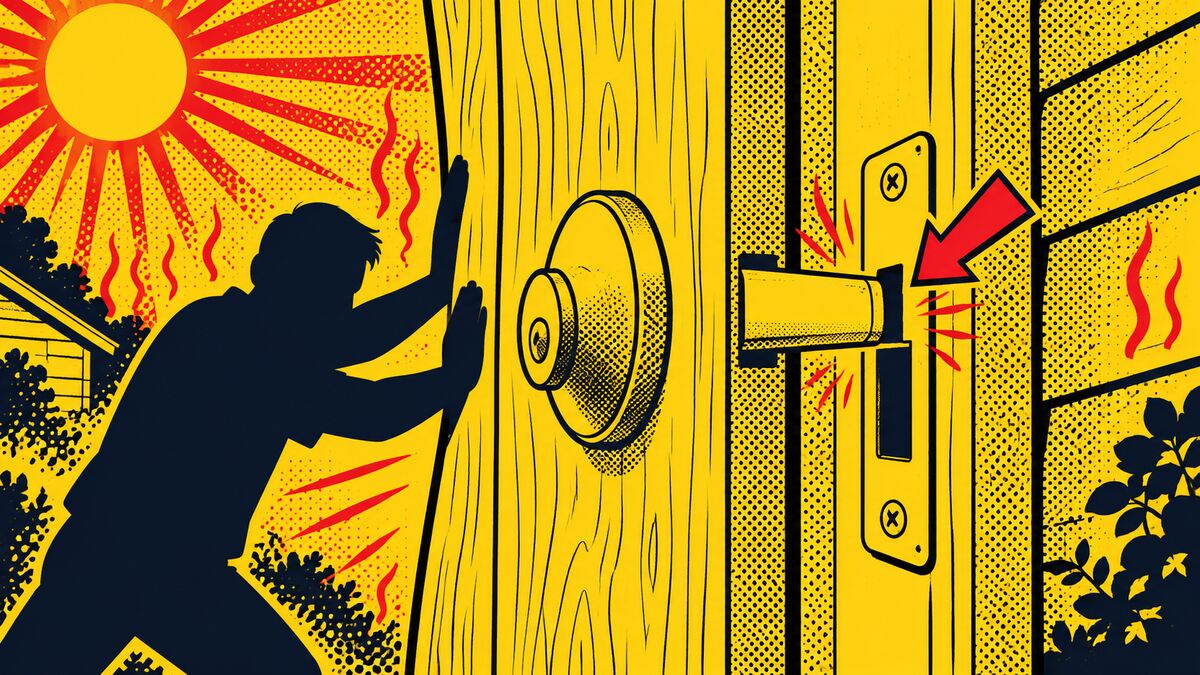
A deadbolt that sticks in summer is often a door-fit problem, not a lock problem: heat and humidity can swell the door and shift the frame so the bolt rubs or misses the strike plate. Test with the door open, check strike alignment, and use a lock-safe lubricant. If the lock is worn, call WOW Locks at (844) 969-5625.
North Texas summers run hot, dry stretches into sudden humid ones, and a door that closed fine in April starts to fight back by August. You can sort the cause in about three minutes with no tools, though sometimes it turns out the lock was never the problem.
Is It the Lock, the Door or the House? A Three-Minute Diagnosis
Open the door and turn the key or thumbturn with the bolt out in the air. If it turns smoothly, the lock is fine and the problem is how the door meets the frame. If it still grinds, the cylinder or the bolt mechanism is the suspect. If several doors in the house misbehave at once, the house is the suspect.
Keep a key in your pocket and a second way out before you start testing. Then match what you see to the table.
| Symptom | Likely cause | Who fixes it |
|---|---|---|
| Turns hard or grinds even with the door open | Dry, dirty or worn cylinder, or a worn key | You (clean and lube), or a locksmith to repair, rekey or replace |
| Smooth with the door open, rubs or sticks when closed | Bolt not lining up with the strike hole | A locksmith can check and adjust or replace the strike |
| Sticks only in humid spells | Door or frame swollen with moisture | A carpenter for the door edge; a locksmith for the lock and strike |
| Binds in the afternoon, fine at night | Sun-baked metal door flexing in heat (thermal bow) | The door maker or installer; shading or a lighter finish can help |
| Door sags, rubs at the top corner on the latch side | Loose hinge screws or a sagging door | You (tighten hinge screws), or a carpenter |
| Several doors and windows stick, new cracks or gaps appear | Soil and foundation movement | A foundation specialist, not a locksmith |
Not sure which row you are in? Describe the symptom to the dispatcher at (844) 969-5625 or through request service. If it is a lock job, WOW Locks quotes it on the call. If it is a frame or foundation job, you will hear that too.
Door Swell and Sag: Why Summer Humidity Cycles Make Doors Bind
Wood takes on moisture and swells when the air gets humid, then shrinks as it dries, so a wood door and its frame fit differently from one week to the next. The door usually binds first along the latch edge, where the bolt and strike sit. Loose hinge screws make it worse by letting the door sag a few millimeters, which is all the bolt needs to miss.
Metal doors have their own version. Allegion, a lock maker, calls it thermal bow: direct sun heats the outside face more than the inside face, so the door flexes slightly and the latch can bind in the strike. The tell is timing. A door that binds in the afternoon sun and behaves at night points to heat, not to the lock.
If the sticking happens at all hours and in every season, look at the frame and the installation before you blame the weather.
The Strike Plate Test (Chalk, Closed Door, Look Where the Bolt Lands)
The strike plate test shows exactly where the bolt hits the frame. Rub chalk, lipstick or a soft pencil on the end of the bolt, close the door, and try to throw the bolt. The mark it leaves on the strike shows whether the bolt lines up with the hole or lands high, low or to one side.
- Keep a key on you so the door cannot lock you out.
- Rub chalk, lipstick or a soft pencil on the tip of the bolt, with the bolt extended.
- Retract the bolt, close the door gently and try to throw it. If it will not throw, stop and do not force it.
- Open the door and look at the strike. A mark in the middle of the hole means alignment is fine.
- A mark above, below or beside the hole shows which way the door or frame has moved.
- Repeat the test at a different time of day, such as a hot afternoon and a cool morning, and compare the marks.
- Take a photo of each result.
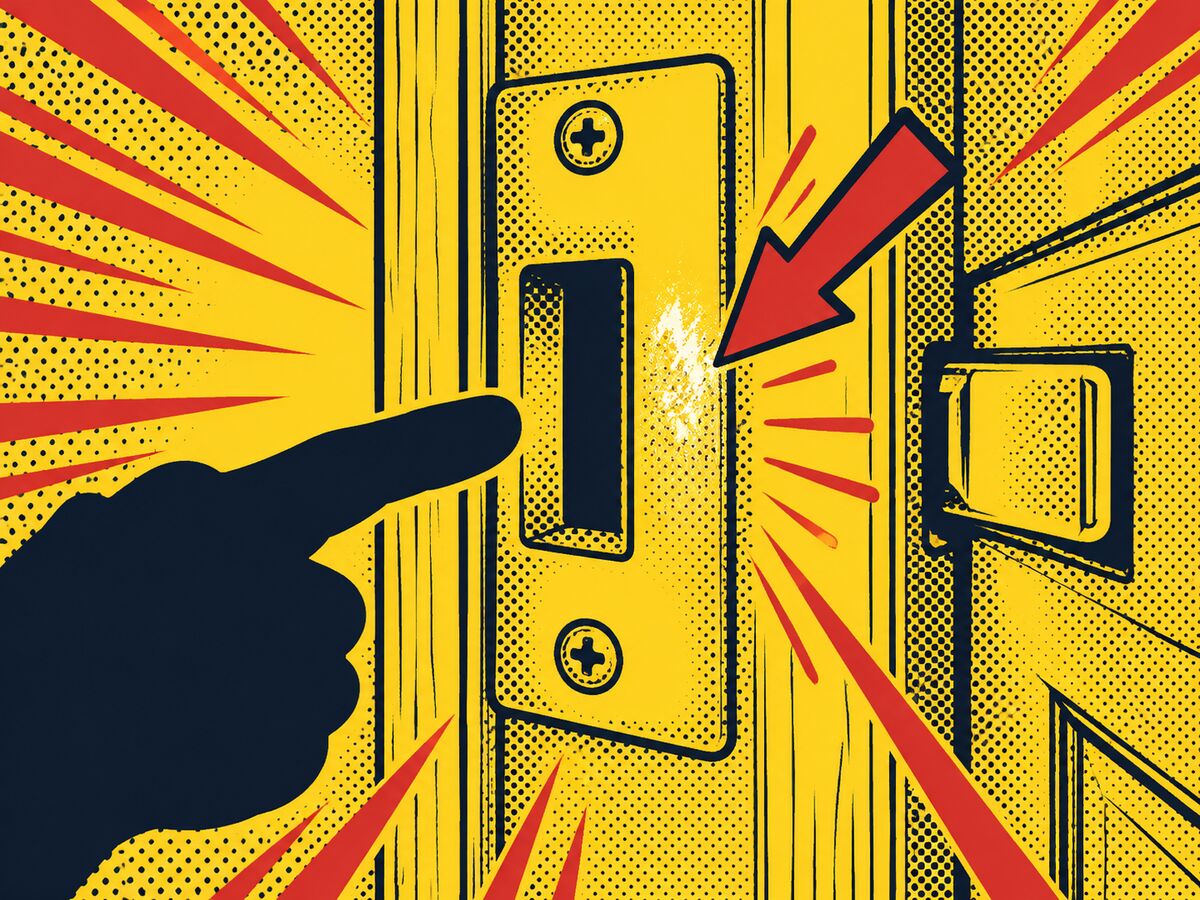
A mark that sits close to the hole is a small fix: adjusting or replacing the strike. A mark that lands far off, or that changes a lot between morning and afternoon, means something is still moving. In that case, a quick fix may not last.
Lubrication Dos and Don’ts for Deadbolts
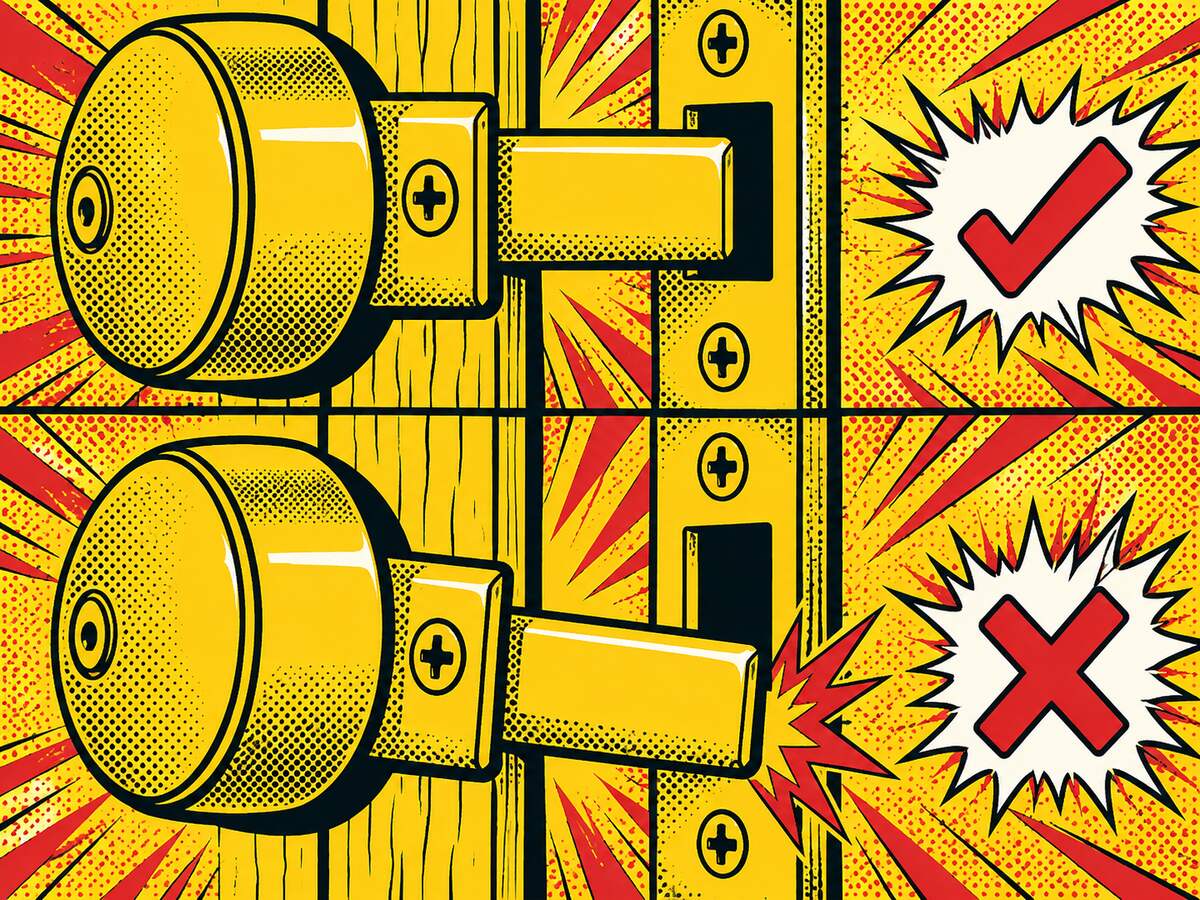
For a lock that is dry or gritty, clean it first, then add a very small amount of a dry lubricant, such as a PTFE-based lock product or powdered graphite. Work the key in and out several times. Skip oily sprays, which attract dust, and do not overdo graphite. Check your lock maker’s guidance first, because products vary.
- Do clean out dust and old lubricant before you add anything new.
- Do use a small amount and work the key through the lock.
- Do keep hinge oil away from the cylinder. Hinges and cylinders need different products.
- Do not spray oil into the keyway and call it done. It can gum up the pins over time.
- Do not keep adding graphite every time the lock sticks. Too much can pack the cylinder and make it worse.
Lock makers such as Schlage list PTFE-style and graphite products in their service manuals, and they warn against over-applying graphite. If cleaning and a light lube do not help, the problem is probably not dryness.
Shifting Clay and When Alignment Is Beyond a Locksmith
Much of the Dallas-Fort Worth area sits on expansive clay that swells when wet and shrinks when dry, according to the Dallas County Master Gardeners. Long dry stretches can move soil under a house, and a house that moves can tilt a door frame. A sticking door is an early clue, not proof. Humidity and wood swell cause the same symptom.
A locksmith can fix a lock and align a strike. A locksmith cannot fix a foundation. Ask a foundation specialist if any of these show up:
- Several doors and windows stick at the same time.
- Gaps open around door or window frames.
- New cracks appear in drywall, brick or trim.
If the frame keeps moving, even a perfect strike adjustment may not stay perfect. This guide is not foundation or engineering advice. For that, you need someone who works on foundations.
When a Deadbolt Is Simply Worn Out: Repair, Rekey or Replace
A deadbolt is worn out when it turns hard with the door open, even after cleaning and a light lube, or when the thumbturn feels loose or the key only works some of the time. First try a fresh key cut from the original or from the lock’s code, because a copy of a copy can make a good lock feel bad. After that, decide between repair, rekey and replace.
- Repair: the lock is sound but one part is worn. Quoted on the call.
- Rekey: the hardware is good and you want new pins and fresh keys. Residential rekeying is $30 per lock with a 3-lock minimum.
- Replace: the lock is loose, damaged or older than you can count. A new deadbolt is $90 for the work, with hardware extra.
Replacing makes more sense when the door itself is fine and the bolt lines up. If you are choosing a new lock, deadbolt installation explains what the job involves, and what a deadbolt lock is covers single and double cylinder options.
What a Lock Fix Costs
Published WOW Locks rates cover a new deadbolt at $90 for the work, with hardware extra, and residential rekeying at $30 per lock with a 3-lock minimum. Strike or latch alignment and lock repair are quoted on the call after you describe the door. Foundation and frame work are not part of a locksmith’s rate card.
| Job | Price | Note |
|---|---|---|
| New deadbolt | $90 for the work | Hardware is extra |
| Residential rekey | $30 per lock | 3-lock minimum; a new two-key set is $15 |
| Strike or latch alignment, lock repair | Quoted on the call | Depends on the door and the lock |
| Foundation or frame repair | Not a locksmith job | See a foundation specialist or carpenter |
Parts and tax are additional, and any add-on is quoted on the call before a technician is dispatched. The full list is on the flat-rate price list.
WOW Locks has local technicians in Dallas-Fort Worth. For your area, see Dallas locksmith and Fort Worth locksmith coverage, then request service or call (844) 969-5625. WOW Locks holds Texas DPS (TOPS) license B10595301 and is insured and bonded.