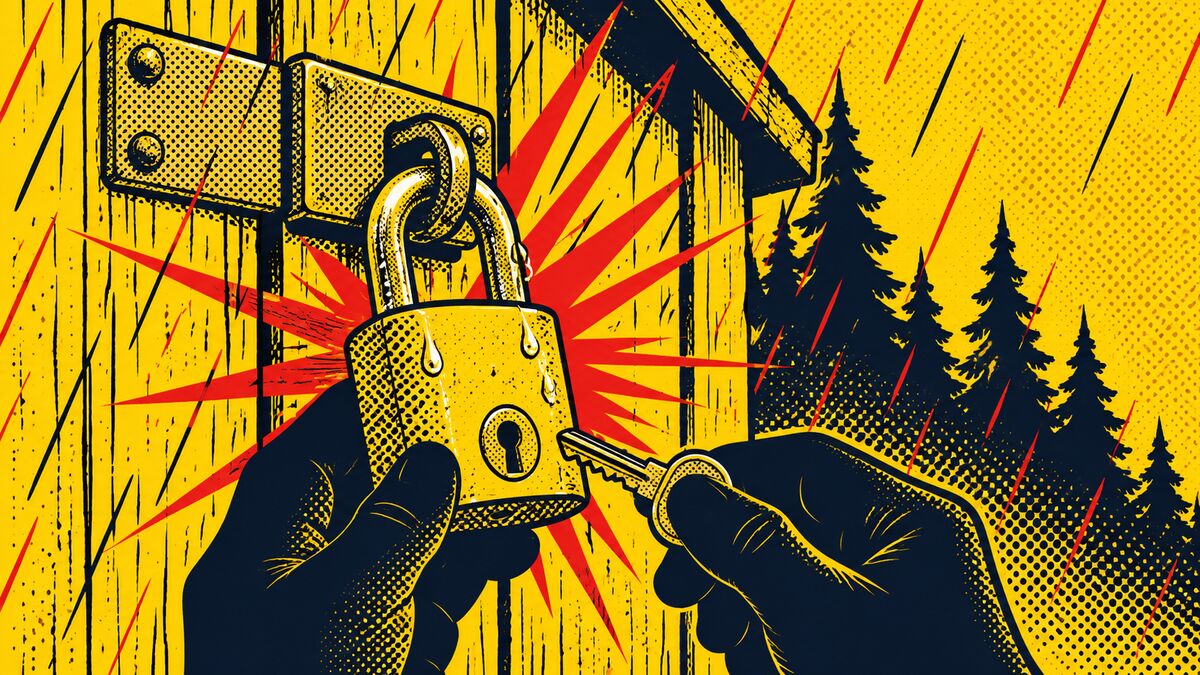
For a shed, gate or storage unit in Cypress, Spring or The Woodlands, pick a weather-rated padlock with a corrosion-resistant body and shackle and a covered keyway. Match the shackle to the hasp, and keep a spare key off the house ring. Padlock supply is a custom quote after we see the job. Call WOW Locks at (844) 969-5625.
Hurricane season runs to November 30 and the air stays wet well into fall, so now is a good time to check every outdoor lock you own.
Why Humid Gulf Coast Air Eats Cheap Padlocks
Constant moisture, summer heat on a metal shed and storm rain all work on a padlock at once. Where two different metals touch with water present, such as a steel shackle in a plated body, the less noble metal corrodes first. A rusty keyway is what seizes. Water, not just age, is the real problem.
Rain is not rare here. The National Weather Service lists a normal of 51.84 inches a year at Houston Intercontinental, the station closest to Spring and the north side, using 1991 to 2020 data (NWS Houston/Galveston). On that same record, June is the wettest month at 6.00 inches and February the driest at 2.97. Your backyard in Cypress or The Woodlands will not match that number exactly, but the point holds: these locks live wet.
The mechanism is simple, and it comes straight from a federal technical bulletin on galvanic corrosion (NIH Office of Research Facilities). It is a building-design bulletin, not a padlock test, but the chemistry is the same.
Why it seizes: Galvanic corrosion needs three things at once: two different metals, a connection between them, and moisture on both. Take away any one and it stops. You cannot remove the rain, so the useful moves are choosing materials that resist it and keeping water out of the keyway.
If you live around Spring, our Spring locksmith page covers the rest of what we do there.
Reading a Weather Rating Without Trusting the Package
Packages quote salt-spray hours or a corrosion grade. Those are lab comparisons, not a promise about a Cypress backyard. ASTM B117 describes the salt-spray test, and ASTM itself says that salt-spray results, used on their own, have seldom correlated with performance in natural environments. In EN 12320, corrosion grade 3 is meant for outdoor use. Use ratings to compare, then check the body and shackle material.
Here is how the common materials generally stack up. Treat this as general guidance, since the comparisons come from manufacturer and retailer notes, not independent humid-air testing.
| Material | Holds up to moisture | Trade-off |
|---|---|---|
| Brass body | Generally good corrosion resistance | Generally not as strong as a stainless body |
| Stainless body or shackle | Generally good corrosion resistance | Generally less strong than hardened steel |
| Hardened steel shackle | Tends to rust more easily | Stronger than a stainless shackle |
| Laminated steel body | Generally less corrosion resistant | Steel plates with exposed rivets, commonly used indoors |
ASTM F883 is the padlock performance standard, and it grades locks on environmental, operating and forcing tests. Those tests are laboratory simulations, and the standard says they do not duplicate real field conditions. We will not quote grade numbers here, because the grade tables sit behind a paywall and a number on a box tells you less than the material in your hand.
Our lake house post covers boat-house and dock padlocks. Here we stay on the suburban shed.
Shackles, Hasps and Body Types: Match the Lock to the Door
The lock is only as good as the hasp it sits on. Pick a shackle length that clears the hasp without slack, and a shrouded or closed shackle where the shackle is exposed. Laminated bodies suit lighter use and tend to rust outdoors, while solid bodies have no exposed rivets. No padlock is cut-proof, so the hasp and its screws matter too.

A walk around the shed with this list is worth the effort:
- Shackle clearance: the shackle should pass through the hasp with little room to spare, not hang loose.
- Hasp screws: they should go through the door into solid framing, not into thin trim or the outside skin alone.
- Body type: a solid body generally holds up better outdoors than a laminated one.
- Covered keyway: a cover or a downward-facing keyway keeps sideways rain out.
A shrouded shackle shields the metal that thieves reach for. For gates on rural land and the keyed-alike thinking behind them, read our ranch gate post rather than repeating it here.
Keyed or Combination: Which Fails Less in a Backyard
Combination padlocks work without a key, but a forgotten or shared code is the common failure, and a dial can gum up in wet weather. Keyed padlocks suit keyed-alike sets and rekeying, but they depend on a spare key you can actually find. Choose by how many people use the lock and how likely a code is to be forgotten.
| Choice | Suits | Watch out for |
|---|---|---|
| Keyed | One or two users who keep track of keys | A lost key with no spare |
| Keyed-alike set | Shed, gate and storage on one key | Needs compatible cylinders and keyways |
| Combination | Many users who cannot share a key | Forgotten or widely shared codes |
If you want one key to open the shed, the side gate and the storage unit, a keyed-alike set is the route. It works only when the cylinders and keyways are compatible, and we confirm that when we see the locks. Many keyed padlocks can also be rekeyed instead of replaced, though not every one can. Our lock rekeying service page explains the difference for door locks.
Padlock supply and keyed-alike sets are a custom quote after we see the job. Our pricing page shows what is published and what is quoted. For the front door, see our keypad deadbolt vs smart lock guide, and for broader home work, our residential locksmith services.
Keeping the Keyway Free in Wet Weather
Moisture and grit are what stick a padlock, so a yearly clean helps more than any one product. Clean more often where it is dusty or corrosive. Follow the lock maker’s instructions first. One maker’s sheet says to blow out dust, use a light greaseless dry lubricant and avoid oil, because oil holds dust. Use very little and wipe the key.

Advice on graphite is mixed. That same sheet warns against dry graphite and silicone for its lock type, while other sellers offer graphite as a dry lubricant. We will not rule on it for you. Read the sheet that came with your lock and do what it says. Lubricant is upkeep, not a rescue, so do not expect it to free a lock that has already seized.
A yearly routine, in order:
- Check the hasp and shackle for rust.
- Blow out dust from the keyway.
- Add a trace of dry lubricant, as the maker’s sheet allows.
- Work the lock several times.
- Wipe the key.
- Note the date, so next season you know.
Storms, Hurricane Season and HOA Gates
The Atlantic hurricane season runs June 1 to November 30, and humidity stays high into fall, so a check of outdoor padlocks before winter makes sense. Rain driven sideways gets into keyways. After a storm, look for bent hasps or warped gates before trusting the lock. Check your HOA rules before changing side-gate hardware.
The dates come from the National Hurricane Center (NOAA climatology). Our hurricane season door locks guide covers doors after storm damage.
Fall check: Look for rust on the shackle and hasp. Turn the key and listen for a stiff keyway. Make sure a spare key exists and is not on the same ring as the house keys. Tighten hasp screws, because a storm can loosen them.
Storage Units: Your Lock, the Facility’s Rules
Many facilities want the tenant to supply the lock and have their own rules about cutting or overlocking. Read your rental agreement and ask the facility office before anyone cuts a lock. If a lock is yours and the key is gone, a locksmith will need proof the unit is yours. Texas law also sets a lien and notice process for unpaid storage rent.
That process sits in Chapter 59 of the Texas Property Code (Texas statutes). We mention it so you know it exists, not to give legal advice. Your rental agreement and the office are the places to start.
Before you cut: Read the rental agreement. Talk to the office. Bring proof the unit is yours. Never cut or grind a lock on a unit you cannot show is yours, and never touch a neighbor’s lock.
Storage matters for business too. A shop owner with a back-room lock or a landlord with a rental shed should read our new storefront lease guide and our guide to rekeying rental units between tenants. Gates at a business site fall under our commercial locksmith services.
Lost Key or Forgotten Combination: What to Do First
Stop before forcing it. Confirm the lock is yours, note its type and where it is, and call us. We tell you what is possible, and the dispatcher may ask you to send a photo. Padlock removal is a custom quote after we see the job, with no figure over the phone. Our local technicians cover Cypress, Spring, The Woodlands and the north Houston suburbs.
- Confirm the lock is yours, and that you can show it.
- Do not force, hammer or grind it.
- Note the lock type, where it is, and take a photo if you can.
- Call (844) 969-5625.
- We explain what is possible and quote after we see the job.
We work in Cypress, Spring and The Woodlands, and on the Humble and Tomball side. The full list is on our Houston page. To start without calling, use the request service form.
WOW Locks opened in 2021, and our technicians bring 17+ years of locksmith experience. WOW Locks LLC is insured and bonded and holds Texas DPS (TOPS) license B10595301. Check your locks now, before the next storm checks them for you.